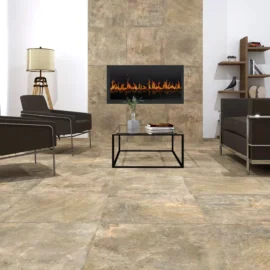
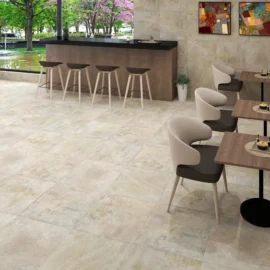
Choosing granite tiles for the kitchen is an important step in furnishing or renovating one of the most used rooms in the home. The kitchen floor is exposed to intense traffic, spills of liquids, grease, stains and temperature changes every day. Therefore, the flooring should not only be beautiful, but also strong, easy to clean and durable for long-term use.
Porcelain stoneware combines these qualities and provides great freedom in interior design. The rich variety of colors, sizes and surfaces allows it to be used both in modern minimalist kitchens and in classic, industrial or rustic spaces.
Why is granite tiles suitable for the kitchen?
Porcelain tiles are produced at high temperature and pressure, which gives them a dense structure and excellent mechanical resistance. They do not deform easily, withstand loads and retain their appearance even in rooms with active daily use.
Low water absorption is another significant advantage. Spills of water, coffee, wine or other liquids can be cleaned up quickly without penetrating deep into the material. The surface is easy to maintain with common cleaning agents, making granite tiles a practical choice for family kitchens and open living spaces.
The material is also suitable for underfloor heating. It conducts and distributes heat effectively, contributing to a more pleasant temperature during the cold months.
Porcelain tiles for floors and walls
Most often, granite tiles are used for kitchen floors, but the same material can also be laid on the walls. This allows for the creation of a complete and harmonious composition. With properly selected tiles, you can shape the area between the kitchen countertop and the upper cabinets or place an accent on a particular wall.
For flooring, it is advisable to choose a surface that offers good grip and does not become too slippery when wet. Matte and structured models are particularly practical because they are less likely to show traces of footsteps, dust and small dirt. Glossy surfaces create a more elegant feel and reflect light, but require more frequent cleaning.
Colors and designs for every kitchen
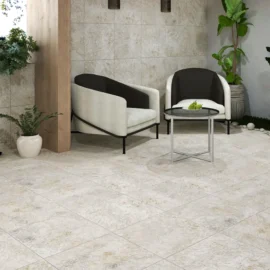
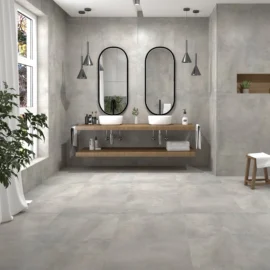
Modern porcelain stoneware can convincingly recreate the look of natural stone, marble, concrete, wood or other materials. Marble-effect models add elegance and are suitable for bright, spacious kitchens. Concrete imitations complement industrial and minimalist styles, while wood-textured decors bring more warmth and coziness.
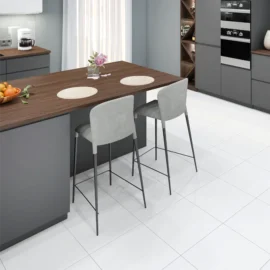
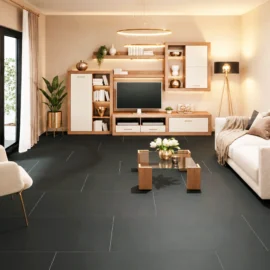
Light tones visually expand small rooms and make them brighter. Beige, cream and light gray are easy to combine with different colors of kitchen furniture. Darker tiles create a strong contrast and emphasize modern furniture, but it is good to use them in rooms with sufficient natural or artificial light.
What size tiles should we choose?
Large format is the preferred solution for modern kitchens. Tiles with dimensions of 60 × 60, 60 × 120 cm or similar formats reduce the number of joints and create a feeling of a wider and calmer surface. They are especially suitable for kitchens combined with a dining room or living room.
Smaller formats can be practical in rooms with complex shapes or when creating decorative areas. Regardless of size, proper layout and professional installation are important for achieving a beautiful and long-lasting result. Rectified tiles can create narrower and more even joints, which contribute to a cleaner look.
Easy maintenance and long-lasting beauty
One of the biggest advantages of granite tiles for the kitchen is its ease of maintenance. Regular cleaning with water and a suitable detergent is usually sufficient. The material does not retain odors and with properly laid and protected joints, maintaining good hygiene is easy.
Quality granite tiles for the kitchen are a long-term investment in the comfort and appearance of the home. They combine durability, functionality and contemporary design, allowing the floor and walls to be shaped according to the individual style of each household.