


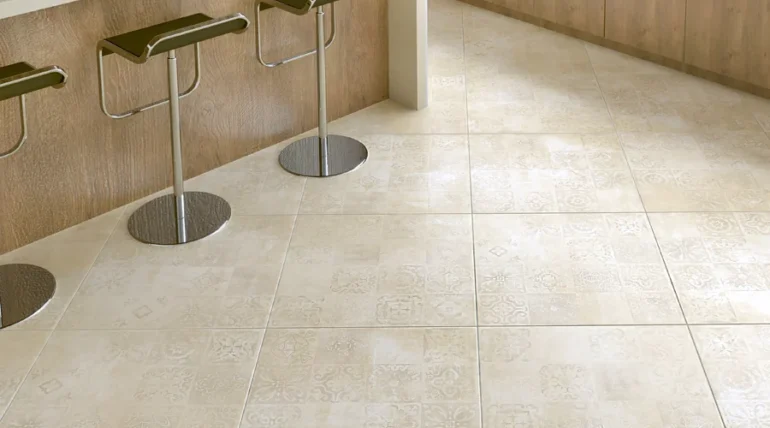
Choosing kitchen tiles often starts with the colour, but a good decision also depends on where they will be installed. The floor endures daily traffic, moving chairs, and spills, while the wall behind the worktop is mainly exposed to splashes, grease, and frequent cleaning. Therefore, the question “porcelain or ceramic wall tiles for the kitchen” has a different answer depending on the area you are furnishing.
For the floor, choose porcelain tiles designed for flooring. For the kitchen splashback and walls, you can use both ceramic wall tiles and suitable porcelain tiles. The two materials can be combined in a single interior without having to compromise on the look.
What is the difference between porcelain and ceramic wall tiles?
Both materials are ceramic tiles, but they differ in structure and purpose. Porcelain tiles have a dense body and low water absorption. Suitable models can be used for both floors and wall cladding.
By “ceramic wall tiles” we usually mean glazed wall tiles with a more porous body. The glaze forms the decorative surface and makes cleaning easier. This makes them a practical choice for kitchen walls, but wall tiles are not intended for floor loads. Always check the specified application of the specific product.
Why choose porcelain tiles for the kitchen floor?
The kitchen is among the most used rooms in the home. Besides cooking, it is where family and guests often gather. The flooring must suit this lifestyle, not just look good in a photo.
A surface tailored to everyday life
When choosing, review the technical specifications of the tiles, including their intended use and wear resistance. If the kitchen is connected to the hallway or living room, consider the load across the entire space. A unified floor covering can visually connect the zones and make it easier to coordinate furniture.
For the floor, also pay attention to anti-slip characteristics. A matt surface in itself does not guarantee slip protection. Check the data for the specific model and do not leave water or grease on the flooring.
A look that complements the furnishings
For a kitchen with wooden cabinets, you can consider tiles with a stone or concrete look. With monochrome fronts, a more expressive pattern on the floor can be a focal point. If the worktop already has strong patterns, a calmer floor covering will help the individual surfaces look good together.
Browse the Izida Ceramica porcelain tile collection and compare designs, sizes, and characteristics according to your project.
When are ceramic wall tiles a good choice for the kitchen?
Ceramic wall tiles are suitable for the wall between the lower and upper cabinets, as well as for other decorative cladding. Here, the main questions are how the finished composition will look and how easy it will be to clean.
A smooth glazed surface is practical around the cooking area. More heavily textured decors create an interesting effect, but indentations may require more attention when cleaning grease. Before purchasing, consider whether the desired decorative effect suits your daily habits.
Ceramic wall tiles are usually easier to cut and drill than porcelain tiles. This can make shaping around sockets and corners easier. However, the final price depends on the specific tiles, the laying pattern, and the installation work.
Can porcelain tiles be used for a kitchen splashback?
Yes, when the product and installation system are suitable for the wall. This is a good option if you want to repeat the floor texture or create a more cohesive look for the kitchen.
With larger tiles, there may be fewer grout lines, but it is important to plan the cutting and socket holes in advance. Draw the kitchen splashback with its exact dimensions, cabinet positions, and visible edges. This way, you will see where the grout lines fall and if any narrow strips of tile remain.
Discuss the substrate preparation, the weight of the cladding, and the appropriate adhesive with the installer. Around the hobs, also coordinate the solution with the appliance manufacturer’s instructions.
How to match tiles with the size and style of the kitchen?
- For a small kitchen: similar tones for tiles, grout, and furniture can create a calmer composition.
- For an open-plan kitchen and living room: coordinate the flooring with the sofa, table, and other furniture visible at the same time.
- For an expressive kitchen splashback: keep the floor and worktop more understated to provide a clear focal point.
- For choosing a format: compare the distribution of whole tiles and offcuts, rather than being guided solely by the size of the room.
Look for ideas in the Izida Ceramica catalogues. Select several options and compare them with samples of the kitchen fronts and worktop under lighting similar to that in your home.
What to consider before purchasing?
Compare the total budget, not just the price per square metre. Include substrate preparation, adhesive, grouting, cutting, and installation. Clarify the required wastage reserve with the tradesman according to the laying pattern and the number of cuts.
Also think about the grout: its colour changes the overall look, and the right grouting material matters for maintenance. For cleaning, follow the instructions for the chosen tiles and grout and avoid experimenting with aggressive detergents.
Porcelain or ceramic wall tiles – which solution is for you?
Porcelain for the floor and ceramic wall tiles for the walls is a practical combination if you prefer different materials and decorative accents. Porcelain can be present in both zones when the goal is a more unified design. The intended use of the specific tiles, ease of maintenance, and well-planned installation are decisive.
See the tiles in person before making a final choice. Find a convenient location among the shops offering Izida Ceramica, and ask about displayed samples and availability of your preferred models.